
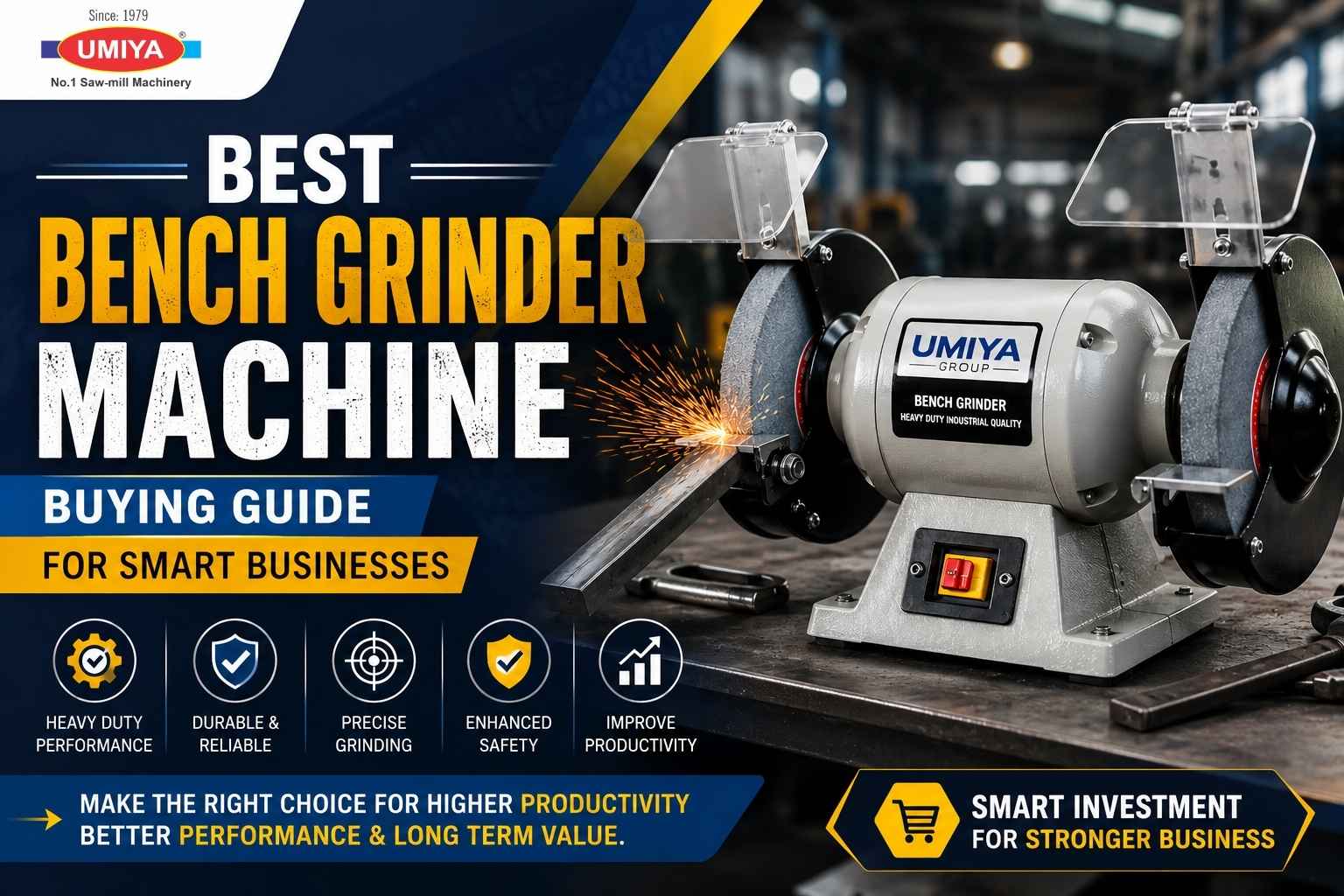
Modern industries depend on precision, speed, and productivity to stay competitive. Every workshop, fabrication unit, manufacturing plant, and engineering company requires reliable machinery that improves operational performance while maintaining quality standards. Among the most useful workshop tools, the Bench Grinder Machine remains one of the smartest investments for industrial businesses.
A grinding machine performs several important tasks such as sharpening tools, smoothing rough edges, polishing metal surfaces, and removing excess material. Because of its versatility, industries across multiple sectors use this equipment daily. Moreover, businesses prefer advanced grinding systems because they reduce manual effort and improve production efficiency.
Today, smart business owners focus on long-term value instead of short-term savings. Therefore, selecting the right grinding equipment requires proper understanding of machine features, industrial applications, durability, safety, and performance. This buying guide explains everything businesses should know before investing in industrial grinding solutions.
Why Every Workshop Needs a Bench Grinder Machine
Industrial workshops handle multiple cutting, shaping, and finishing tasks every day. Therefore, businesses require efficient equipment capable of improving workflow and reducing production delays.
A grinding machine uses rotating abrasive wheels to shape and finish different materials. Unlike manual grinding methods, industrial grinding equipment delivers faster and more accurate results. Consequently, businesses improve productivity and maintain professional finishing standards.
Moreover, companies can use this machine for:
- Tool sharpening
- Surface finishing
- Metal polishing
- Rust removal
- Deburring
- Edge smoothing
As a result, workshops save time while increasing operational efficiency.
How a Bench Grinder Machine Improves Industrial Productivity
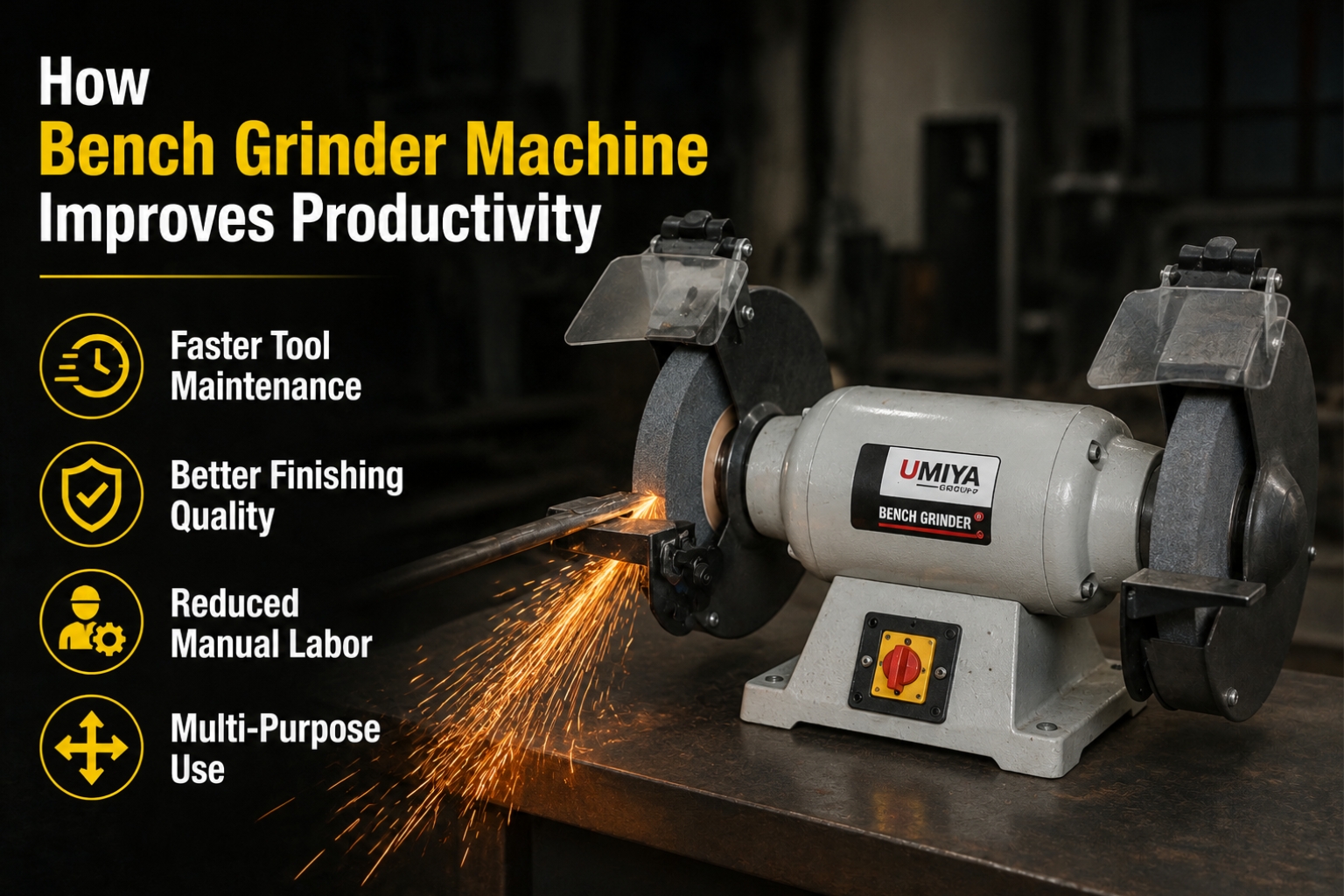
Productivity directly affects business growth. Therefore, industries always search for equipment that speeds up operations while maintaining quality.
1. Faster Tool Maintenance
Sharp tools improve manufacturing accuracy. Grinding equipment allows workers to sharpen tools quickly without interrupting production schedules.
2. Better Finishing Quality
Industrial products require smooth and professional finishing. Grinding systems help businesses achieve consistent results with minimal effort.
3. Reduced Manual Labor
Manual grinding consumes time and energy. However, modern machinery completes the same tasks faster and more efficiently.
4. Multi Purpose Functionality
A single machine performs several operations. Consequently, businesses reduce equipment costs and save workshop space.
Types of Bench Grinder Machine Used in Industries
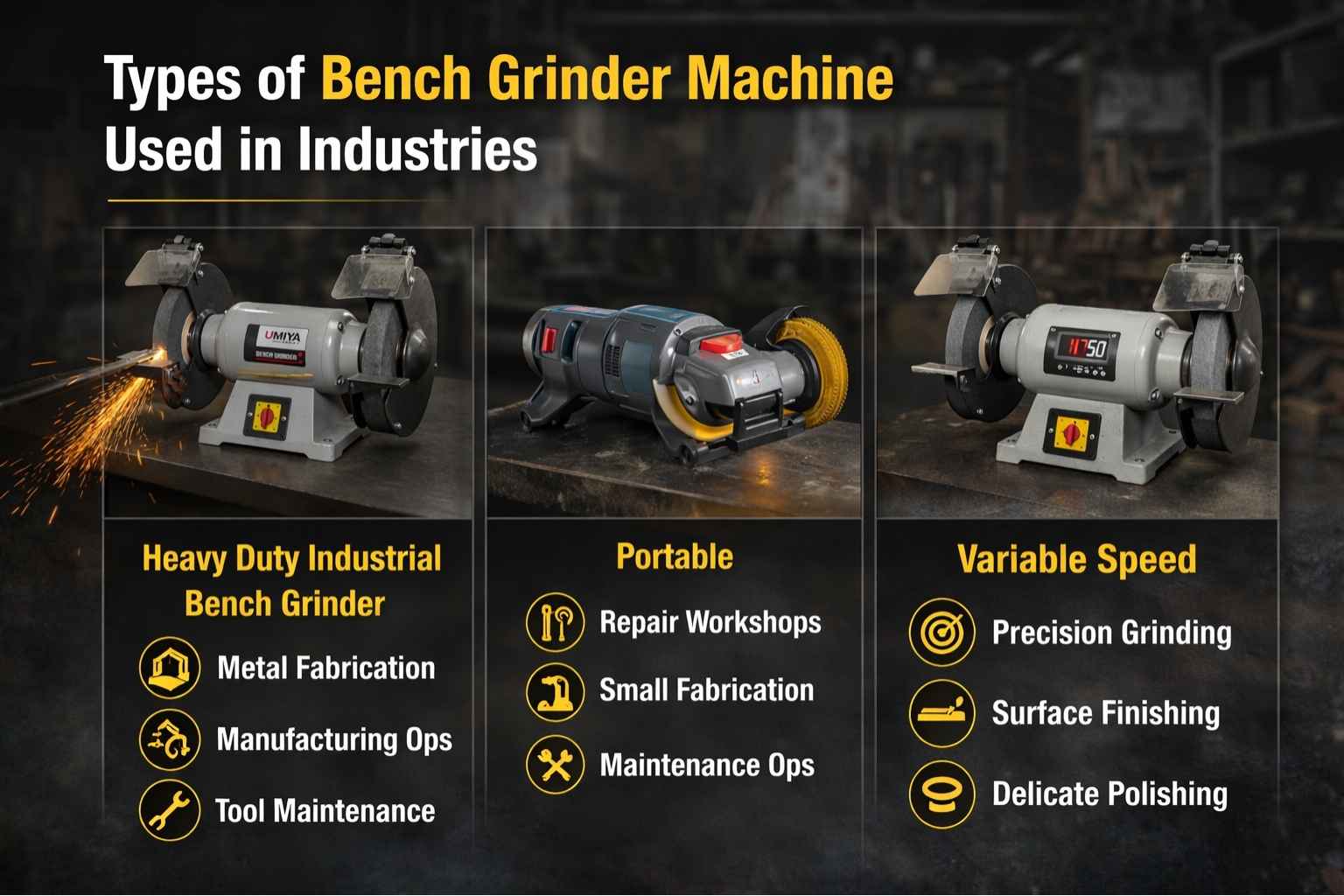
Different industries require different grinding solutions. Therefore, understanding machine categories helps businesses choose suitable equipment.
1. Heavy Duty Industrial Bench Grinder Machine
Heavy-duty models support continuous industrial operations. These machines include powerful motors, strong construction, and larger grinding wheels.
Industries commonly use them for:
- Metal fabrication
- Manufacturing operations
- Tool maintenance
- Engineering workshops
Additionally, these machines deliver stable performance even under heavy workloads.
2. Portable Grinding Machines
Portable machines are compact and lightweight. Small workshops and repair centers prefer them because they are easy to transport and install.
These systems work best for:
- Repair workshops
- Small fabrication tasks
- Maintenance operations
Moreover, portable equipment offers flexibility in limited workspace environments.
3. Variable Speed Bench Grinder Machine
Variable speed technology allows users to adjust grinding speed according to operational needs.
This feature improves:
- Precision grinding
- Surface finishing
- Delicate polishing work
- Material compatibility
Consequently, businesses achieve better control and improved finishing quality.
Important Features to Consider Before Buying a Bench Grinder Machine
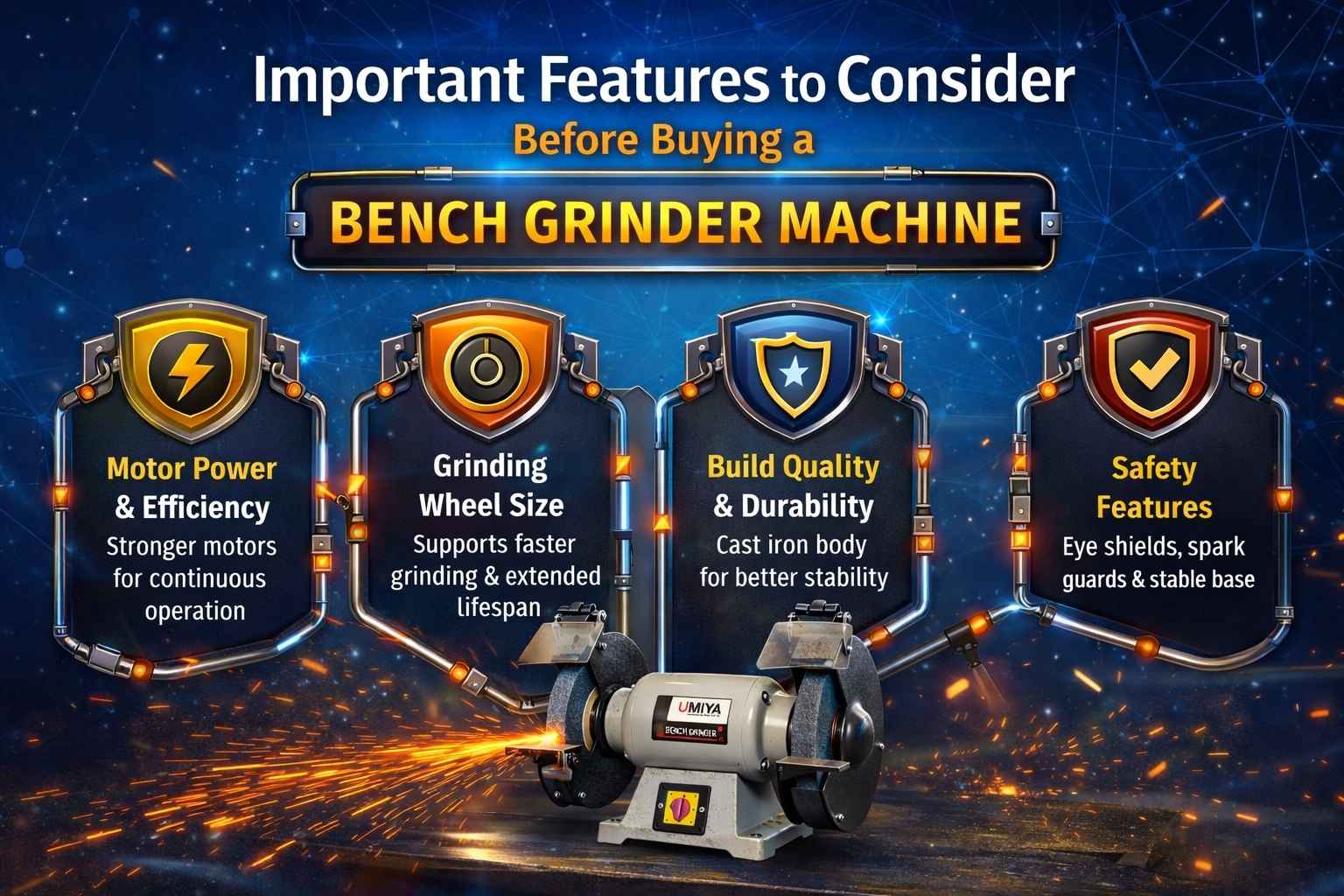
Buying industrial machinery requires proper research. Smart businesses compare technical features carefully before making final decisions.
1. Motor Power and Efficiency
Motor power affects grinding speed and overall performance. Heavy industrial applications require stronger motors for continuous operation.
General recommendations include:
- Light-duty work: Lower horsepower motors
- Medium operations: Standard industrial motors
- Heavy-duty applications: High-performance motors
Furthermore, energy-efficient motors reduce electricity consumption and operational costs.
2. Grinding Wheel Size
Wheel size influences grinding capacity and finishing quality. Larger wheels support faster grinding and extended wheel lifespan.
Common wheel materials include:
- Aluminum oxide
- Silicon carbide
- Ceramic abrasives
Each material serves specific industrial applications. Therefore, businesses should select suitable wheel types according to operational needs.
3. Build Quality and Durability
Industrial machinery operates under demanding conditions. Machines with cast iron construction offer better stability and durability.
Additionally, strong machine bodies reduce vibration and improve operational safety.
4. Safety Features
Safety remains one of the most important factors in industrial environments.
Businesses should prioritize machines equipped with:
- Spark guards
- Eye shields
- Wheel guards
- Emergency stop switches
- Stable machine bases
Consequently, these features improve worker protection and reduce accident risks.
Industrial Applications of Bench Grinder Machine
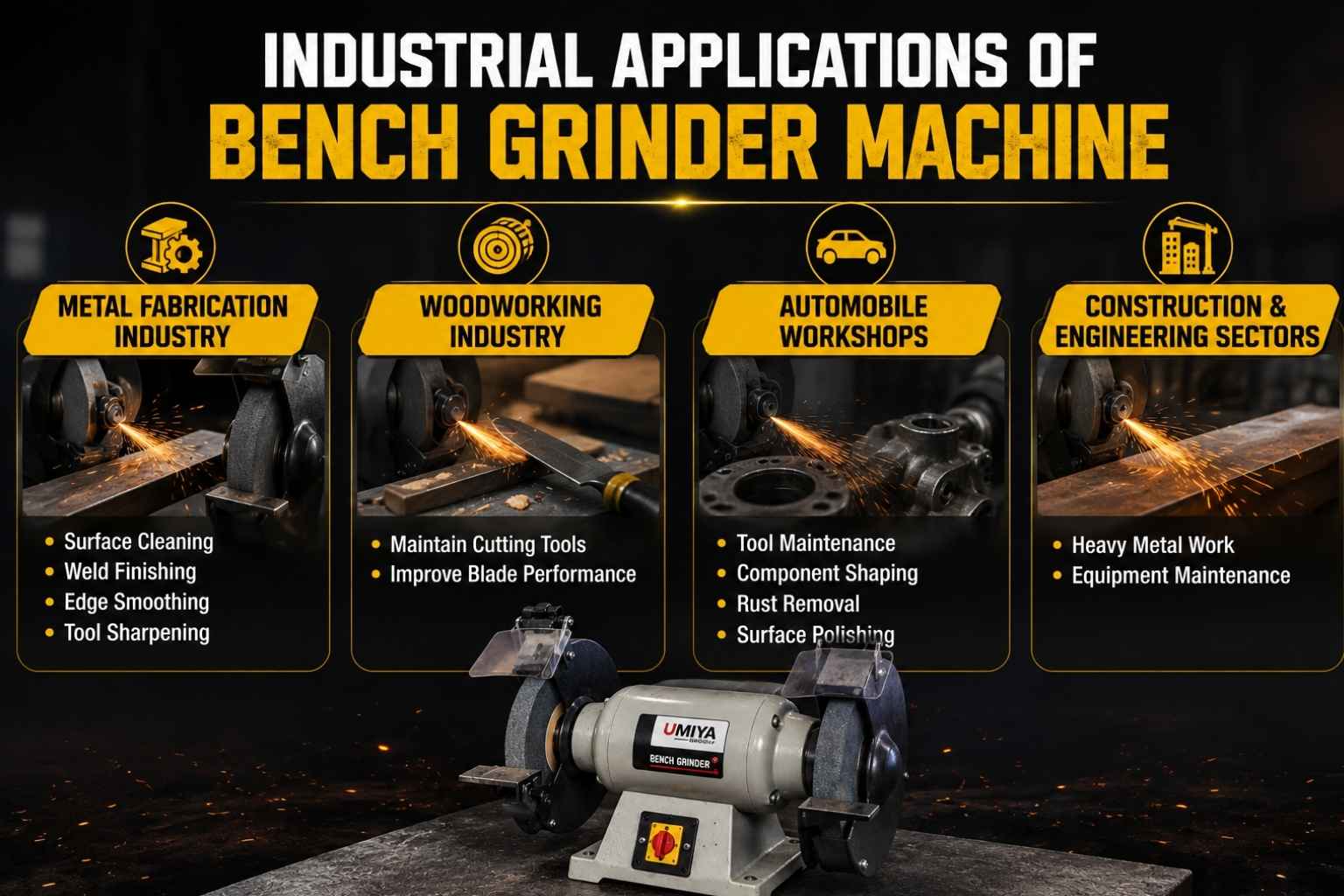
Grinding equipment supports multiple industrial sectors because of its versatility and operational efficiency.
1. Metal Fabrication Industry
Fabrication industries use grinding machines for:
- Surface cleaning
- Weld finishing
- Edge smoothing
- Tool sharpening
Moreover, professional grinding improves final product appearance and quality.
2. Woodworking Industry
Woodworking workshops use grinding systems to maintain cutting tools and improve blade performance.
As a result, production accuracy increases significantly.
2. Automobile Workshops
Automotive industries depend on grinding equipment for:
- Tool maintenance
- Component shaping
- Rust removal
- Surface polishing
Additionally, technicians complete repair work more efficiently using reliable grinding systems.
3. Construction and Engineering Sectors
Construction industries require grinding machines for heavy metal work and equipment maintenance.
Therefore, grinding equipment becomes an essential part of industrial operations.
How to Choose the Right Bench Grinder Machine for Your Business
Every business has unique operational requirements. Therefore, selecting the right machinery requires careful evaluation.
1. Understand Your Workshop Needs
Businesses should first analyze:
- Material types
- Daily workload
- Precision requirements
- Workshop size
- Future expansion plans
Answering these questions simplifies the buying process.
2. Compare Technical Specifications
Industrial buyers should compare:
- Motor capacity
- Grinding speed
- Wheel dimensions
- Machine durability
- Safety systems
Additionally, proper comparison helps businesses avoid unsuitable investments.
3. Focus on Long Term Value
Many companies purchase low-cost machinery without considering durability. However, poor-quality machines increase maintenance costs and reduce productivity.
Therefore, businesses should prioritize long-term operational value instead of short-term savings.
4. Evaluate Manufacturer Reputation
Reliable manufacturers provide:
- Better machine quality
- Technical support
- Spare parts availability
- Warranty coverage
Consequently, businesses experience fewer operational problems after installation.
How a Band Saw Machine Improves Business Productivity
Every business has unique operational requirements. Therefore, selecting the right machinery requires careful evaluation.
1. Understand Your Workshop Needs
Businesses should first analyze:
- Material types
- Daily workload
- Precision requirements
- Workshop size
- Future expansion plans
Answering these questions simplifies the buying process.
2. Compare Technical Specifications
Industrial buyers should compare:
- Motor capacity
- Grinding speed
- Wheel dimensions
- Machine durability
- Safety systems
Additionally, proper comparison helps businesses avoid unsuitable investments.
3. Focus on Long Term Value
Many companies purchase low-cost machinery without considering durability. However, poor-quality machines increase maintenance costs and reduce productivity.
Therefore, businesses should prioritize long-term operational value instead of short-term savings.
4. Evaluate Manufacturer Reputation
Reliable manufacturers provide:
- Better machine quality
- Technical support
- Spare parts availability
- Warranty coverage
Consequently, businesses experience fewer operational problems after installation.
Common Mistakes Businesses Should Avoid
Many industries make poor purchasing decisions because they ignore important operational factors.
Choosing Cheap Machines Without Research
Low-cost equipment may seem attractive initially. However, inferior machines often create maintenance and performance issues.
Ignoring Safety Features
Industrial safety should never be compromised. Machines without proper protective systems increase workplace risks.
Buying Without Future Planning
Businesses expecting growth should invest in scalable equipment that supports future operational expansion.
Maintenance Tips for Long Lasting Performance
Proper maintenance improves machine lifespan and operational reliability.
1. Clean the Machine Regularly
Dust and debris reduce grinding efficiency. Therefore, regular cleaning remains essential.
2. Inspect Grinding Wheels Frequently
Damaged wheels affect safety and grinding quality. Businesses should replace worn wheels immediately.
3. Lubricate Moving Components
Lubrication reduces friction and prevents unnecessary wear.
Why Bench Grinder Machine Is a Smart Investment
Every successful business focuses on productivity, quality, and operational efficiency. Therefore, investing in reliable grinding equipment offers long-term benefits.
A high-quality grinding system helps businesses:
- Improve workflow
- Increase productivity
- Enhance finishing quality
- Reduce downtime
- Maintain tools efficiently
Moreover, durable industrial equipment supports consistent manufacturing operations and long-term business growth.
As industries continue modernizing, advanced grinding technology will become even more important for manufacturing success.
Conclusion : Why Bench Grinder Machine Is Essential for Smart Businesses
Choosing the right Bench Grinder Machine is an important decision for workshops, manufacturing plants, fabrication units, and engineering industries. The right equipment improves productivity, supports precision operations, and reduces long-term maintenance costs.
Additionally, businesses should always evaluate motor power, wheel size, durability, safety features, and operational requirements before purchasing industrial machinery. Understanding industrial applications and maintenance requirements also helps companies make smarter investment decisions.
Furthermore, modern grinding systems continue evolving with automation and energy-efficient technologies. Therefore, businesses investing in high-quality equipment today can improve operational efficiency and future productivity.