
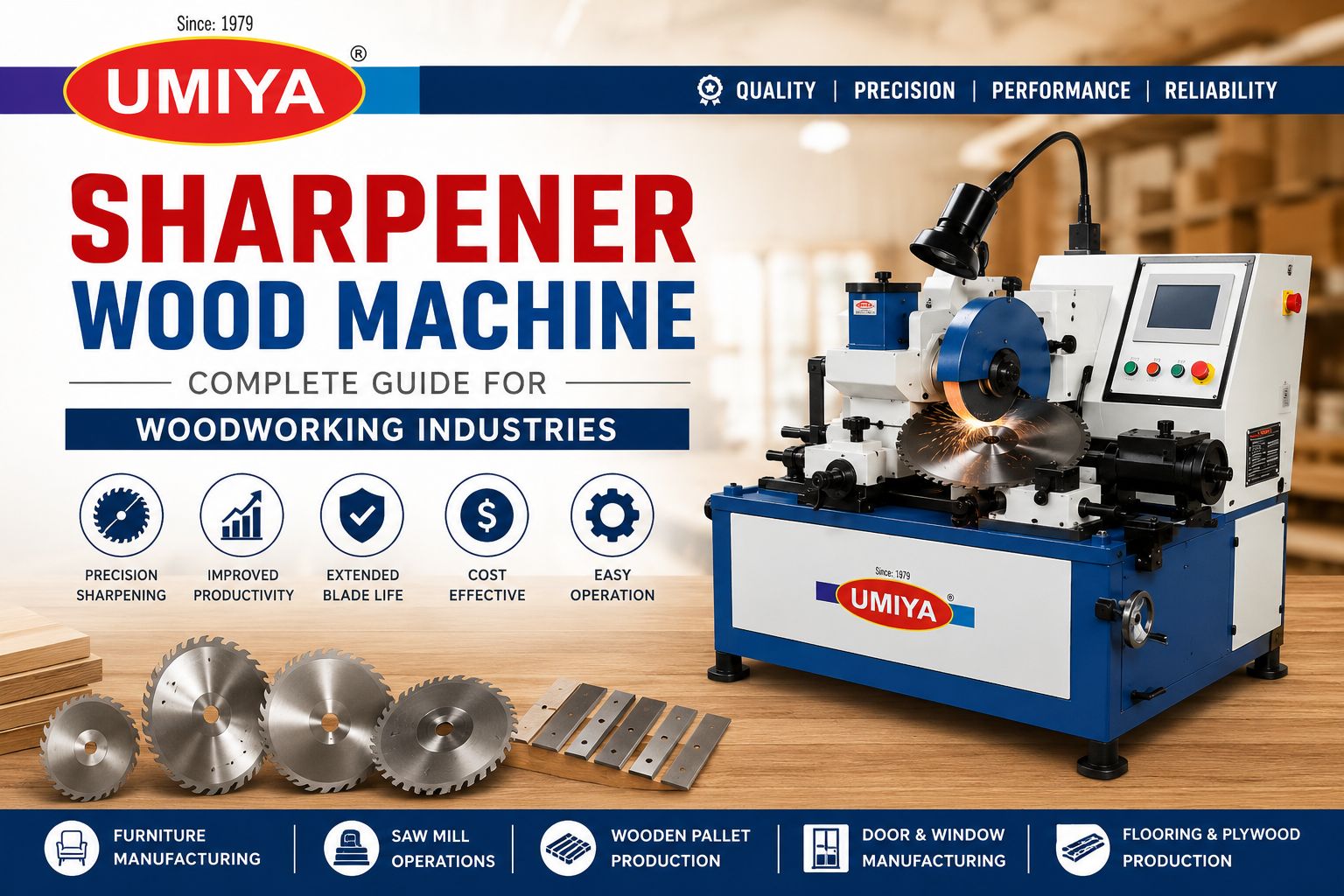
The woodworking industry relies heavily on precision, speed, and consistency. Whether a company manufactures furniture, wooden pallets, doors, windows, flooring, or customized wooden products, the quality of its cutting tools directly affects production efficiency. Over time, however, cutting blades become dull due to continuous operation. As a result, productivity drops, material waste increases, and operating costs rise.
This is where a Sharpener Wood Machine becomes an essential asset. Instead of replacing expensive blades frequently, manufacturers can restore blade sharpness and maintain high cutting performance through professional sharpening equipment. Moreover, a well-maintained blade delivers cleaner cuts, reduces machine load, and improves overall product quality.
Today, modern woodworking businesses focus on reducing downtime while maximizing output. Therefore, investing in advanced sharpening technology is no longer optional. It has become a strategic decision that supports long-term growth and operational excellence.
What Is a Sharpener Wood Machine
A Sharpener Wood Machine is a specialized machine designed to sharpen woodworking blades and cutting tools. It restores the original cutting edge of circular saw blades, band saw blades, planer knives, cutter heads, and other woodworking tools.
Instead of manually sharpening blades, operators can use a sharpening machine to achieve consistent and highly accurate results. Consequently, businesses save time, reduce labor costs, and improve production efficiency.
Why Woodworking Industries Need a Sharpener Wood Machine
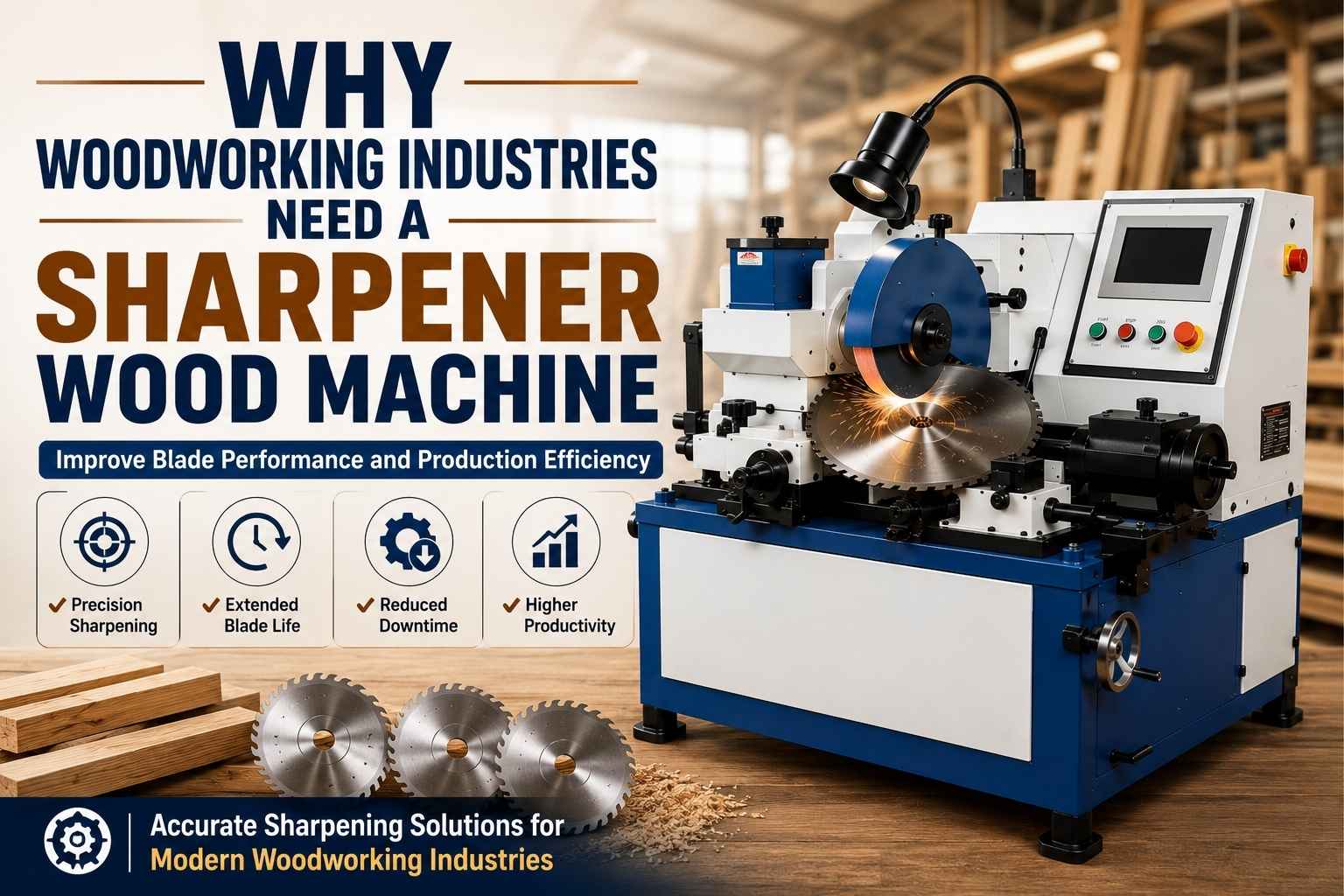
Every woodworking operation depends on sharp cutting tools. When blades lose their edge, machines require more power and produce lower-quality cuts.
A sharpening solution helps businesses:
- Maintain cutting precision
- Extend blade lifespan
- Reduce downtime
- Lower production costs
- Improve product quality
- Increase machine efficiency
- Minimize material waste
1. Common Problems Caused by Dull Blades
Dull blades create several challenges that impact productivity and profitability.
2. Reduced Cutting Quality
Blunt cutting edges often produce rough and uneven surfaces. Consequently, additional finishing work becomes necessary.
3. Increased Material Waste
Poor cutting accuracy can damage valuable wood materials. Therefore, manufacturers may experience higher waste levels.
4. Higher Energy Consumption
Dull blades require more force to cut through wood. As a result, machines consume additional power.
5. Frequent Production Delays
When blades become ineffective, operators must stop production to replace or repair them.
Key Benefits of Using a Sharpener Wood Machine
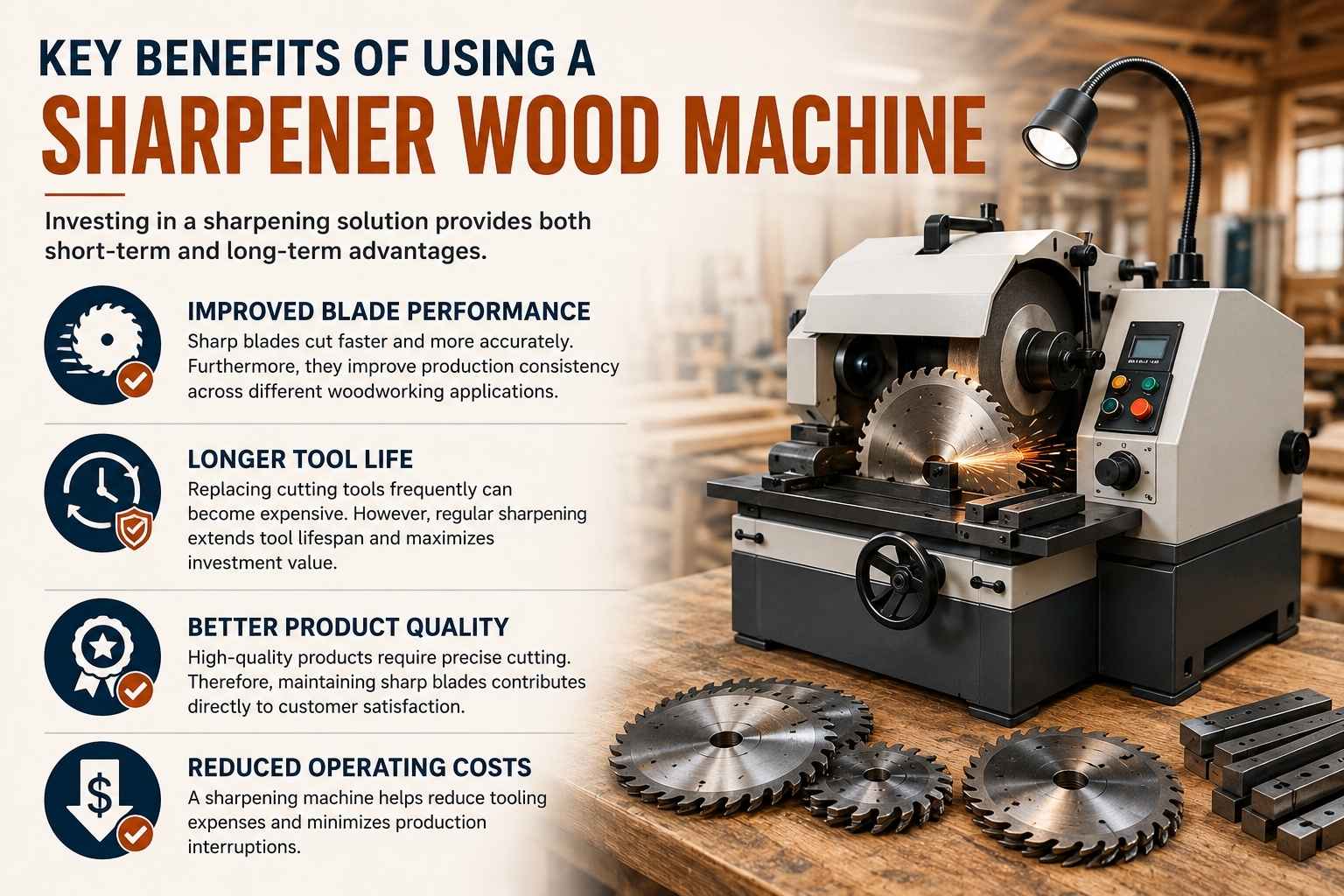
Investing in a sharpening solution provides both short-term and long-term advantages.
1. Improved Blade Performance
Sharp blades cut faster and more accurately. Furthermore, they improve production consistency across different woodworking applications.
2. Longer Tool Life
Replacing cutting tools frequently can become expensive. However, regular sharpening extends tool lifespan and maximizes investment value.
3. Better Product Quality
High-quality products require precise cutting. Therefore, maintaining sharp blades contributes directly to customer satisfaction.
4. Reduced Operating Costs
A sharpening machine helps reduce tooling expenses and minimizes production interruptions
Sharpener Wood Machine Features That Matter Most
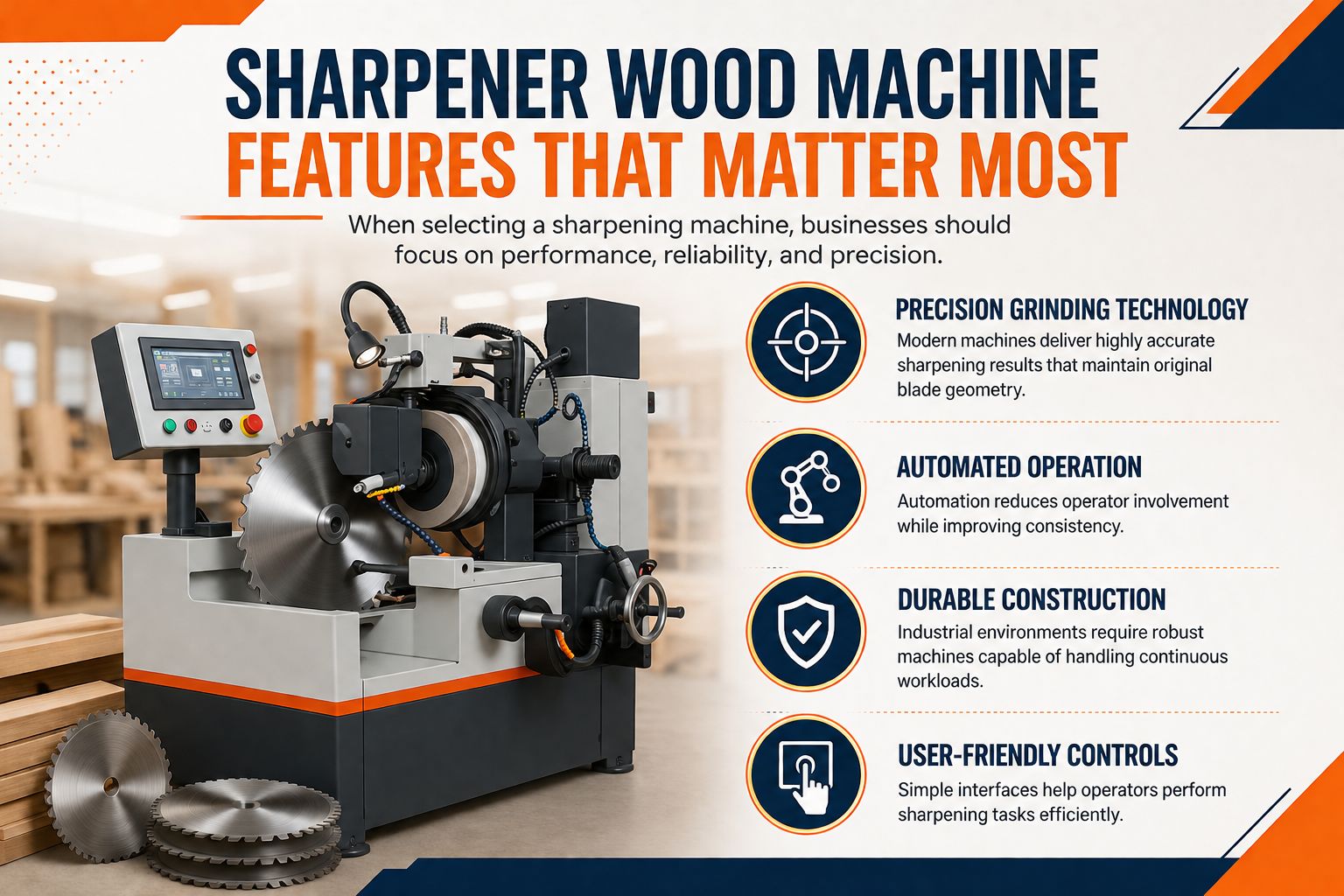
When selecting a sharpening machine, businesses should focus on performance, reliability, and precision.
1. Precision Grinding Technology
Modern machines deliver highly accurate sharpening results that maintain original blade geometry.
2. Automated Operation
Automation reduces operator involvement while improving consistency.
3. Durable Construction
Industrial environments require robust machines capable of handling continuous workloads.
4. User-Friendly Controls
Simple interfaces help operators perform sharpening tasks efficiently.
Sharpener Wood Machine Applications Across Industries
| Industry | Application | Benefits |
|---|---|---|
| Furniture Manufacturing | Saw Blade Sharpening | Smooth and Accurate Cuts |
| Wooden Pallet Production | Blade Maintenance | Increased Productivity |
| Saw Mills | Circular Blade Sharpening | Reduced Downtime |
| Door Manufacturing | Cutter Maintenance | Improved Finishing Quality |
| Window Manufacturing | Tool Sharpening | Consistent Dimensions |
| Flooring Industry | Blade Restoration | Precision Cutting |
| Plywood Production | Saw Maintenance | Enhanced Efficiency |
| Modular Furniture Industry | Blade Sharpening | Better Product Quality |
How a Sharpener Wood Machine Improves Productivity
Productivity remains a key factor in every manufacturing environment.
1. Faster Cutting Operations
Sharp blades cut efficiently and require less resistance.
2. Reduced Machine Wear
Lower cutting resistance places less stress on machinery.
3. Fewer Blade Replacements
Sharpening extends blade life and reduces replacement costs.
4. Improved Workflow
Reliable cutting performance supports smoother production schedules.
Choosing the Right Sharpener Wood Machine
Selecting the right machine requires careful consideration.
Blade Compatibility
Choose equipment capable of handling various blade types.
Automation Level
Automated machines often provide better consistency and higher productivity.
Production Capacity
Evaluate daily sharpening requirements before purchasing equipment.
Maintenance Requirements
Easy maintenance helps minimize downtime.
Technical Support
Reliable after-sales support ensures long-term operational success.
Future Trends in Sharpener Wood Machine Technology
The woodworking industry continues to adopt advanced technologies.
Smart Automation
Modern systems increasingly use intelligent controls.
Digital Monitoring
Operators can track machine performance in real time.
Improved Precision
Advanced grinding technologies deliver exceptional accuracy.
Industry 4.0 Integration
Connected machines improve production management and efficiency.
Frequently Asked Questions About Sharpener Wood Machine
It is used to sharpen and restore the blunt cutting edges of various industrial woodworking blades and tools.
It can sharpen planer blades, circular saw blades, bandsaw blades, and various wood carving chisels.
The frequency depends on usage, material type, and production volume.
Yes. Proper sharpening significantly extends blade life and reduces replacement costs.
Yes. Sharp blades provide cleaner, smoother, and more precise cuts.
No FAQ found.
Final Thoughts on Choosing the Right Sharpener Wood Machine
A Sharpener Wood Machine is an essential investment for companies that want to maintain high cutting accuracy and consistent production quality. Sharp blades deliver cleaner cuts, reduce material waste, and help achieve better results across a wide range of woodworking applications. As a result, businesses can improve efficiency while maintaining the quality standards their customers expect.
Regular blade sharpening also helps extend tool life and reduce the cost of frequent blade replacements. In addition, properly maintained cutting tools improve machine performance, minimize downtime, and support smoother production processes. These advantages contribute to higher productivity and more cost-effective operations over time.
Whether you operate a saw mill, furniture manufacturing facility, pallet production plant, or other woodworking business, investing in the right sharpening solution can deliver long-term value. A reliable Sharpener Wood Machine helps improve operational performance, supports consistent product quality, and contributes to sustainable business growth.