
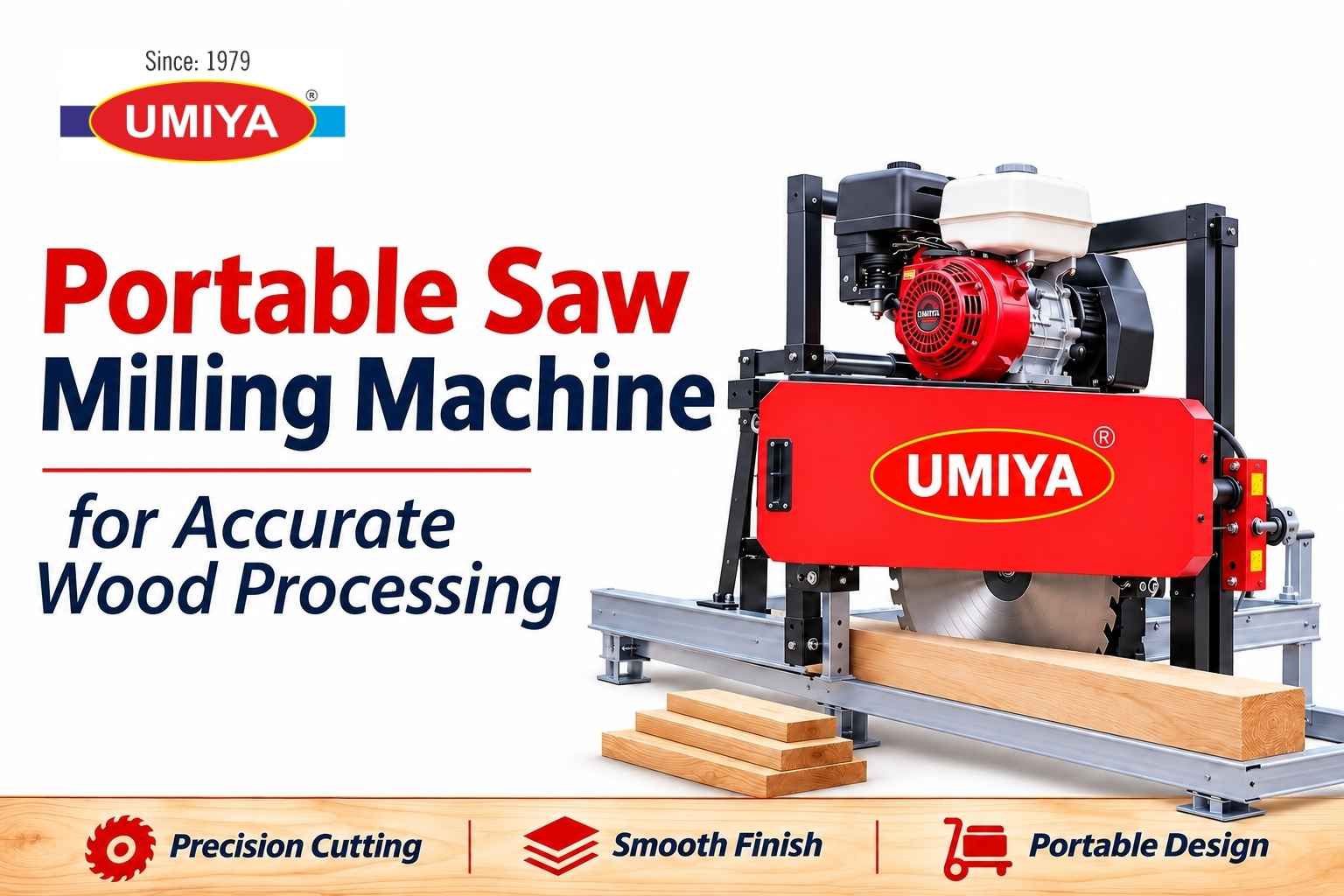
Wood processing requires accuracy, consistency, and the right machinery to achieve quality results. Whether a business handles timber preparation, furniture manufacturing, or custom woodworking, efficient cutting equipment plays an important role in daily operations. However, traditional wood cutting methods may require additional handling, more workspace, and considerable manual effort.
A Portable Saw Milling Machine offers a practical solution for businesses that need flexible timber cutting and efficient wood processing. It helps operators process wooden logs and timber according to specific cutting requirements. Moreover, its portable design can support different working environments where fixed machinery may not offer enough flexibility.
Today, woodworking businesses increasingly focus on improving production efficiency while maintaining cutting accuracy. Therefore, choosing suitable saw milling equipment can help workshops, timber processors, and small manufacturing units manage their operations more effectively.
This guide explains how portable saw milling equipment works, its important features, practical applications, and the factors businesses should consider before selecting a suitable machine.
What Is a Portable Saw Milling Machine?
A portable saw milling machine is wood processing equipment designed to cut timber and wooden logs into usable sizes. Unlike conventional fixed sawmill setups, portable systems offer greater flexibility in positioning and handling different cutting requirements.
Depending on the machine design, operators can use this equipment for preparing timber boards, processing wooden logs, and producing lumber for various woodworking applications.
Furthermore, businesses can select suitable configurations based on log dimensions, cutting capacity, production requirements, and available working space.
How Does Portable Saw Milling Equipment Work?
The machine uses a cutting mechanism to process timber into specific dimensions. Although designs differ between manufacturers, most systems include a supporting structure, cutting blade, guiding arrangement, and material positioning components.
The general working process involves:
- Timber Preparation: Operators inspect and prepare wooden logs before cutting.
- Material Positioning: They place the timber securely on the machine support.
- Cutting Adjustment: Operators select the required cutting dimensions.
- Sawing Operation: The cutting mechanism processes the timber according to the selected measurements.
- Final Inspection: Workers check the finished wood for dimensional accuracy and surface quality.
As a result, a suitable machine can simplify timber preparation and help maintain consistent production standards.
Why Portability Matters in Wood Processing
Portability provides additional flexibility for woodworking operations. For example, businesses that process timber at different locations may benefit from equipment that they can transport and position according to their requirements.
Additionally, portable machinery can help smaller workshops manage available floor space. Instead of depending entirely on large fixed installations, businesses can explore equipment configurations that better match their production environment.
However, buyers should always check transportation requirements, machine dimensions, installation needs, and operating conditions before making a decision.
Key Features of a Portable Saw Milling Machine
When selecting wood cutting equipment, businesses should consider more than the machine’s basic cutting function. Its construction, operating arrangement, cutting capacity, and maintenance requirements also influence long-term performance.
Here are some important features to evaluate.
1. Flexible Timber Cutting Capacity
Different woodworking projects require different timber dimensions. Therefore, cutting capacity should be one of the first factors buyers evaluate.
A suitable machine should match the typical log sizes and board dimensions used in the business. This helps operators manage regular production requirements without unnecessary adjustments.
2. Accurate Cutting Performance
Cutting accuracy directly affects the quality and usability of finished timber. In furniture manufacturing and other woodworking applications, consistent dimensions help reduce material wastage and additional finishing work.
Consequently, buyers should examine the machine’s blade guidance, adjustment system, structural stability, and available cutting specifications.
3. Portable and Space-Conscious Design
A portable design can offer practical advantages for workshops with limited space or changing production locations.
Moreover, an appropriate machine configuration can make equipment arrangement easier. However, portability depends on the machine’s actual construction, weight, transport arrangement, and installation requirements.
4. Strong Machine Construction
A stable machine structure supports reliable cutting operations. Therefore, buyers should check the frame material, component quality, supporting arrangements, and overall construction.
A well-designed structure can help reduce unwanted movement during operation and support consistent machining performance.
5. Convenient Operation and Adjustment
An understandable operating arrangement helps workers manage routine cutting tasks more efficiently.
For this reason, businesses should review material positioning, blade adjustment, safety controls, and operator accessibility before selecting a machine.
Benefits of Using a Portable Saw Milling Machine for Timber Processing
Woodworking businesses need equipment that supports productivity without compromising quality. Portable saw milling systems can provide several practical advantages when businesses select the right configuration.
1. Improved Wood Processing Flexibility
One major advantage involves operational flexibility. Businesses can choose equipment that suits their workshop arrangement and specific timber processing needs.
Furthermore, portable configurations may help operators manage projects that require timber cutting at different working locations.
2. Better Material Utilisation
Accurate cutting and proper timber planning can help businesses use raw materials more effectively.
For example, operators can plan board dimensions according to project specifications. Consequently, they may reduce unnecessary offcuts and improve the usable output from timber logs.
Actual material savings depend on timber quality, cutting technique, machine specifications, and operator experience.
3. Support for Small and Medium Workshops
Small and medium-sized woodworking businesses often need practical machinery that fits their production capacity.
A portable setup may provide a suitable option for businesses that do not require a large industrial sawmill installation. Nevertheless, buyers should compare machine capacity with their expected workload.
4. Efficient Timber Preparation
Timber preparation forms an important stage in furniture manufacturing, carpentry, construction, and other woodworking activities.
With suitable cutting equipment, businesses can prepare wooden boards and components for further processing. As a result, workshops can organise their production workflow more effectively.
5. Greater Application Flexibility
Different industries use processed timber for different purposes. Portable saw milling equipment can support several timber preparation requirements depending on its technical capabilities.
This makes machine selection particularly important for businesses handling multiple types of woodworking projects.
Common Applications of Portable Saw Milling Equipment
Timber cutting supports several industries, from furniture production to construction and specialised woodworking. Therefore, businesses should understand where portable saw milling equipment can add value.
1. Furniture Manufacturing
Furniture manufacturers use processed timber to create tables, chairs, cabinets, beds, doors, and other wooden products.
Accurate timber preparation helps manufacturers maintain consistent component dimensions. Additionally, properly prepared wooden boards make subsequent cutting, shaping, and assembly easier.
2. Timber and Lumber Processing
Timber processing businesses convert wooden logs into usable boards and lumber for commercial applications.
Depending on its cutting capacity, a suitable machine can help operators prepare different timber sizes for further manufacturing or distribution.
3. Construction and Carpentry
Construction projects often require wooden components for interior work, structural applications, doors, frames, and other installations.
Portable saw milling equipment can support timber preparation according to project requirements. Consequently, contractors and woodworking professionals can organise their material preparation more efficiently.
4. Custom Woodworking Workshops
Custom woodworking businesses frequently handle different project sizes and timber specifications.
A flexible cutting arrangement can help these workshops manage individual customer requirements. Moreover, suitable equipment can support a wider range of timber preparation tasks.
5. Wooden Packaging and Pallet Manufacturing
Wooden pallets, packaging frames, and industrial wooden supports require properly prepared timber components.
Saw milling equipment can help businesses prepare wooden sections for further cutting and assembly. However, the machine’s suitability depends on the required timber dimensions and production volume.
How to Choose the Right Portable Saw Milling Machine
Selecting suitable machinery requires a clear understanding of production requirements. Instead of focusing only on the purchase price, businesses should evaluate machine specifications, operational needs, and long-term maintenance.
Here are some important considerations.
1. Understand Your Timber Cutting Requirements
First, identify the type of wood and log dimensions you regularly process.
Different timber species have different densities and cutting characteristics. Therefore, buyers should discuss their material requirements with the machine manufacturer before selecting a suitable model.
2. Check Cutting Capacity and Dimensions
Every machine has specific cutting limitations. These may include maximum log diameter, cutting width, cutting depth, and available adjustment ranges.
Reviewing these specifications helps businesses determine whether the machine matches their daily production requirements.
3. Evaluate Blade Quality and Compatibility
The cutting blade directly influences the machine’s performance and finished timber quality.
Buyers should check blade compatibility, replacement availability, recommended blade specifications, and maintenance requirements.
Furthermore, operators should follow the manufacturer’s instructions when selecting and replacing cutting blades.
4. Consider Machine Stability
Machine stability plays an important role in consistent cutting performance.
A properly designed supporting structure helps maintain the required material position during operation. Therefore, buyers should examine the frame, supporting arrangement, and overall construction quality.
5. Review Safety Features
Wood cutting involves moving blades, timber handling, and potential flying particles. Therefore, workplace safety should remain a priority.
Before purchasing, check the available safety guards, emergency stop arrangements, operator controls, and recommended protective equipment.
6. Compare Maintenance and Service Requirements
Regular maintenance helps businesses keep their machinery in suitable working condition.
Check the availability of replacement components, technical assistance, maintenance instructions, and after-sales support.
H4: Important Questions to Ask Before Purchasing
- What is the maximum log diameter the machine can handle?
- Which timber types can it process?
- What cutting dimensions does it support?
- Which blade specifications does it require?
- What installation and operating arrangements are necessary?
- Does the manufacturer provide technical support?
By answering these questions, buyers can make a more informed machinery investment.
Portable Saw Milling Machine Maintenance for Long-Term Performance
Regular maintenance supports consistent machine operation and helps prevent avoidable equipment problems. In addition, a planned maintenance routine can improve workplace safety and reduce unexpected interruptions.
1. Clean the Machine After Regular Use
Wood dust, chips, and debris can collect around machine components during cutting operations.
Operators should clean the equipment according to the manufacturer’s maintenance instructions. In particular, they should keep the cutting area and supporting components free from accumulated debris.
2. Inspect Cutting Blades
Blades require regular inspection because wear and damage can affect cutting quality.
Check for dull edges, damaged teeth, incorrect blade tension, and other visible issues. Replace or service blades according to the manufacturer’s recommendations.
3. Check Moving Components
Moving components need proper inspection and maintenance. Operators should examine the machine’s guiding arrangements, adjustment mechanisms, and other important parts.
Furthermore, they should follow the recommended lubrication schedule wherever applicable.
4. Maintain Electrical and Mechanical Components
Electrical connections, motors, switches, and mechanical assemblies require suitable inspection.
Only qualified personnel should handle electrical repairs or complex mechanical adjustments. Always disconnect the power supply before performing maintenance procedures that require access to moving or electrical components.
5. Follow Safe Operating Procedures
Proper machine operation protects both workers and equipment.
Operators should:
- Read the operating manual before using the machine.
- Wear appropriate personal protective equipment.
- Secure timber before starting the cutting process.
- Keep hands away from moving blades.
- Avoid operating damaged or improperly adjusted equipment.
- Follow the manufacturer’s safety instructions.
Why the Right Woodworking Machinery Matters for Business Growth
Choosing appropriate machinery is an important decision for any woodworking business. The right equipment can help improve production planning, support consistent product quality, and manage different customer requirements.
However, businesses should consider the complete production process rather than purchasing machinery based on a single feature.
For instance, a timber processing unit may require equipment for log cutting, board preparation, shaping, joining, and finishing. Therefore, selecting compatible machines can help create a more organised workflow.
Additionally, businesses should consider future production requirements. A machine that suits today’s workload should also align with the company’s expected growth and operational capabilities.
When evaluating machinery suppliers, look at:
- Product specifications and available models
- Machine construction and component quality
- Application suitability
- Operating and maintenance requirements
- Technical guidance and customer support
- Spare parts availability
A thoughtful selection process helps businesses choose equipment that supports their actual manufacturing needs.
Frequently Asked Questions About Portable Saw Milling Machines
A Portable Saw Milling Machine cuts wooden logs and timber into boards or other required dimensions. Businesses use this equipment for timber preparation, woodworking, furniture manufacturing, and related applications.
A portable sawmill offers greater flexibility in transportation and positioning, depending on its design. In comparison, a stationary sawmill generally operates from a fixed installation with a dedicated production arrangement.
Yes, suitable machines can process different timber species. However, cutting capacity, blade compatibility, wood density, and manufacturer specifications determine which materials a particular machine can handle.
Blade condition, machine stability, material positioning, adjustment settings, timber quality, and operator experience can all influence cutting accuracy.
It can be a suitable option for small workshops that need flexible timber cutting capabilities. However, buyers should compare machine capacity, available workspace, and production requirements before purchasing.
No FAQ found.
Businesses should clean the machine regularly, inspect cutting blades, check moving components, follow lubrication instructions, and arrange servicing according to manufacturer recommendations.
Was this helpful?
Operators should use appropriate protective equipment, secure timber properly, follow operating instructions, maintain safe distances from moving blades, and check machine safety features before operation.
Was this helpful?
Proper cutting adjustments and careful timber planning can help reduce unnecessary offcuts. However, the actual results depend on timber condition, cutting accuracy, machine design, and operator skills.
Was this helpful?
Portable saw milling machines support timber processing, furniture manufacturing, carpentry, construction, wooden packaging, and custom woodworking industries. Businesses use them to prepare wooden logs and boards for different applications.
Was this helpful?
Buyers should evaluate cutting capacity, blade quality, machine construction, portability, safety features, maintenance requirements, and after-sales support. These factors help businesses select equipment that matches their timber processing needs.
Was this helpful?
No FAQ found.
Businesses should clean the machine regularly, inspect cutting blades, check moving components, follow lubrication instructions, and arrange servicing according to manufacturer recommendations.
Operators should use appropriate protective equipment, secure timber properly, follow operating instructions, maintain safe distances from moving blades, and check machine safety features before operation.
Proper cutting adjustments and careful timber planning can help reduce unnecessary offcuts. However, the actual results depend on timber condition, cutting accuracy, machine design, and operator skills.
Portable saw milling machines support timber processing, furniture manufacturing, carpentry, construction, wooden packaging, and custom woodworking industries. Businesses use them to prepare wooden logs and boards for different applications.
Buyers should evaluate cutting capacity, blade quality, machine construction, portability, safety features, maintenance requirements, and after-sales support. These factors help businesses select equipment that matches their timber processing needs.
No FAQ found.
Conclusion: Choose the Right Portable Saw Milling Machine for Efficient Wood Processing
Woodworking businesses need reliable equipment to manage timber cutting, improve material utilisation, and maintain consistent production quality. A suitable Portable Saw Milling Machine can support these requirements by offering flexible cutting arrangements and practical timber processing capabilities.
From furniture manufacturing and timber preparation to construction and wooden packaging, the right machinery can make everyday operations more organised and efficient.
However, selecting the right equipment requires careful consideration of cutting capacity, machine construction, blade quality, safety features, and maintenance support.
Therefore, businesses should evaluate their actual production requirements before investing in woodworking machinery. Exploring suitable equipment from Umiya Group can help businesses understand available woodworking solutions and identify machinery that matches their operational needs.
Explore woodworking machinery and product solutions at Umiya Group.