
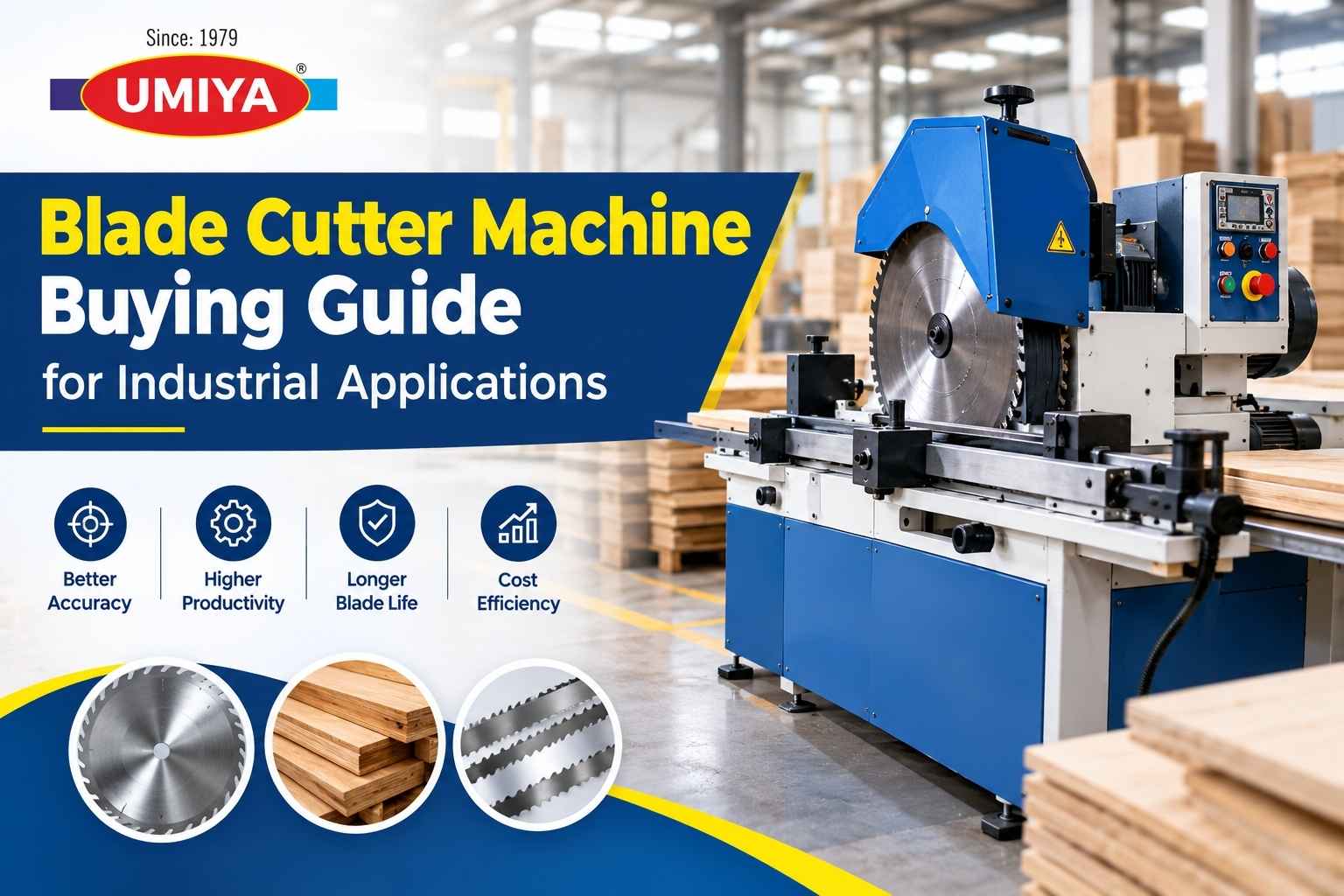
Industrial cutting plays an important role in manufacturing, woodworking, packaging, fabrication, and several other production environments. Businesses need equipment that delivers consistent results, supports daily production targets, and helps control operating costs. Therefore, selecting the right Blade Cutter requires more than comparing prices or choosing a machine based on its appearance. Buyers should evaluate the material, cutting requirements, operating capacity, safety features, maintenance needs, and long-term value before making a decision.
A well-chosen cutting machine can help businesses improve workflow, reduce unnecessary material waste, and maintain consistent product dimensions. However, the right solution depends on the application. A machine suitable for cutting wood may not meet the requirements of plastic processing, sheet materials, or other industrial applications.
This buying guide explains the important factors industrial buyers should consider, the features worth comparing, and the questions to ask suppliers before purchasing cutting equipment. Whether you are upgrading an existing production line or planning a new facility, these practical insights can help you make an informed investment.
What Is a Blade Cutter and How Does It Work?
A blade cutter is an industrial cutting machine or cutting tool that uses a sharp blade to divide, trim, shape, or process materials into the required dimensions. Depending on the machine design, it may use a straight blade, rotary blade, circular blade, or continuous cutting blade.
Manufacturers design different cutting systems for specific materials and production requirements. For example, woodworking facilities may require equipment that processes timber or wooden components, while packaging businesses may need precise cutting solutions for paperboard, films, or similar materials.
The cutting mechanism varies according to the application. Some machines use manual feeding, while others feature powered feeding systems, adjustable cutting settings, or automated controls.
Understanding the Main Components
Before comparing machines, buyers should understand the components that influence performance and usability.
- Cutting blade: Determines the cutting method and suitability for the intended material.
- Motor and drive system: Supplies the power required to operate the cutting mechanism.
- Material support: Holds the workpiece in position during cutting.
- Adjustment mechanism: Helps operators set dimensions or cutting angles where applicable.
- Safety guards: Help protect operators from contact with moving components.
- Control system: Allows operators to manage machine functions and operating parameters.
- Frame and base: Provide structural support and help maintain stability during operation.
Not every machine includes all these components in the same configuration. Therefore, buyers should confirm the actual features and specifications of the model they intend to purchase.
Types of Blade Cutter Machines for Industrial Applications
Industrial cutting requirements vary significantly between industries. Consequently, understanding the main machine categories can help buyers narrow their options before requesting quotations.
1. Straight Blade Cutting Machines
Straight blade machines use a linear cutting edge to cut, trim, or separate suitable materials. Manufacturers offer different configurations for applications involving textiles, packaging materials, flexible sheets, and other compatible products.
These machines may suit operations that require repeatable straight cuts. However, buyers should check the maximum material thickness, cutting length, blade design, and supported material types before choosing a model.
2. Rotary Blade Cutting Machines
Rotary cutting systems use a rotating blade to cut suitable materials. Depending on their design, they can support continuous or repetitive cutting operations in selected production environments.
Packaging, converting, and certain textile applications may benefit from rotary cutting technology. The correct blade diameter, rotation speed, and feed arrangement depend on the material and desired cutting result.
3. Circular Blade Cutting Machines
Circular blade equipment uses a rotating circular cutting edge. Industrial versions serve various applications, including selected woodworking, fabrication, and material-processing tasks.
When comparing these machines, consider cutting depth, blade diameter, spindle speed, motor capacity, and the manufacturer’s recommended materials. A larger blade does not automatically guarantee better performance; the complete machine configuration must match the intended work.
4. Band Saw Cutting Equipment
Band saw machines use a continuous loop blade that travels around wheels to cut suitable materials. Industrial workshops use different band saw configurations for applications such as timber processing, metal cutting, and component manufacturing.
These machines differ from straight or rotary cutting systems, so buyers should evaluate them separately when their production requires continuous blade movement.
5. Specialised Industrial Cutting Solutions
Some production environments require application-specific equipment with specialised blade profiles, automated feeding, positioning systems, or integrated production controls.
For these applications, discuss the actual workpiece, material properties, production volume, and dimensional tolerances with the supplier. A machine designed around the process can often provide a better fit than a general-purpose model.
Key Factors to Consider When Buying a Blade Cutter
Choosing industrial equipment involves balancing production requirements, workplace safety, operating costs, and available space. The following factors provide a practical framework for evaluating different machines.
1. Identify the Material You Need to Cut
Start by identifying the material that the machine will process. Wood, plastic, paperboard, rubber, textiles, and metals have different cutting characteristics. Even materials within the same category may require different blade geometries or operating settings.
For example, dense hardwood may require different cutting conditions from softwood. Similarly, a flexible plastic sheet may behave differently from a rigid plastic component.
Before purchasing, provide the supplier with details about:
- Material type and grade.
- Maximum and minimum thickness.
- Material width, length, and shape.
- Surface finish requirements.
- Expected cutting accuracy.
- Any special handling requirements.
Where possible, request a cutting demonstration using a representative sample of your actual material.
2. Evaluate Cutting Capacity and Dimensions
Machine capacity directly affects the size of the workpieces you can process. Therefore, compare the manufacturer’s stated cutting capacity with your current requirements and expected future production.
Check the maximum cutting width, depth, length, workpiece dimensions, and any limitations associated with different cutting angles. Also, consider whether the machine can accommodate occasional larger jobs without compromising safety or accuracy.
A machine with insufficient capacity can restrict production flexibility. On the other hand, purchasing substantially more capacity than you need may increase the initial investment without providing a meaningful operational benefit.
3. Check Motor Power and Operating Performance
Motor power influences a machine’s ability to handle its intended workload. Nevertheless, higher power alone does not establish that a machine will deliver better cutting results.
Blade selection, feed rate, material characteristics, drive design, and machine rigidity also affect performance. Ask the supplier to explain how the motor and drive system support your particular application.
Furthermore, clarify whether the machine can operate reliably during your expected production shifts. For demanding applications, discuss the manufacturer’s recommended duty cycle and maintenance schedule.
4. Prioritise Cutting Accuracy and Repeatability
Consistent dimensions matter in industries where components must fit together or meet specified measurements. Therefore, review the machine’s achievable tolerances and repeatability rather than relying on general descriptions such as high precision.
Ask for measurable performance information relevant to your material and cutting process. If your business produces multiple sizes, check how easily operators can adjust settings and repeat previous cutting configurations.
A stable machine structure, suitable blade selection, correct alignment, and proper operating procedures can all contribute to consistent results.
5. Compare Blade Quality and Replacement Options
The blade is one of the most important elements in any cutting system. Its material, tooth design, thickness, geometry, and compatibility with the machine influence cutting performance and service life.
Before making a purchase, ask:
- Which blade types does the machine support?
- Are replacement blades readily available?
- What factors determine blade life?
- How should operators inspect and replace blades?
- Does the manufacturer recommend specific blade specifications for different materials?
Also, compare the ongoing cost of consumables. A low initial machine price may not represent the best value if replacement blades are expensive or difficult to obtain.
6. Consider Automation and Ease of Operation
Automation can improve consistency and reduce repetitive manual tasks when the application justifies the investment. Depending on the machine, useful features may include powered feeding, digital measurement displays, programmable settings, automatic positioning, or production counters.
However, not every business needs advanced automation. A smaller workshop with varied, low-volume jobs may benefit more from a straightforward machine that operators can adjust easily.
Evaluate the skills of your existing workforce, training requirements, production volume, and expected return on investment before choosing an automated configuration.
How to Choose the Right TCT Blade
Buying a blade based only on price can create unnecessary problems.
Instead, evaluate the complete cutting application.
1. Consider the Material
First, identify exactly what you will cut.
Ask:
- Is it hardwood or softwood?
- Is it solid timber or engineered wood?
- Does the material contain glue or laminate?
- Does it contain abrasive particles?
- What thickness will you cut?
These answers help determine the suitable blade configuration.
2. Check the Tooth Count
Tooth count affects the balance between cutting speed and surface finish.
Generally, fewer teeth can support faster material removal, while higher tooth counts can provide finer cutting results. However, the ideal configuration depends on blade diameter, material thickness, machine speed, feed rate, and tooth geometry.
Therefore, never select tooth count in isolation.
3. Match the Blade to the Machine
A technically excellent blade can still perform poorly if it does not match the machine.
Before purchasing, check:
- Blade dimensions
- Arbor size
- Machine RPM
- Cutting capacity
- Feed mechanism
- Maximum blade speed
- Mounting requirements
Correct compatibility supports safer and more stable operation.
4. Consider the Required Finish
Think about the final product.
If the cut will receive additional processing, a high-speed configuration may be appropriate. If the edge will remain visible, however, a finer cutting configuration may deliver better value.
In other words, the best blade is the one that matches the final production requirement.
Safety Features Every Industrial Buyer Should Check
Machine safety should remain a priority throughout equipment selection, installation, and operation. Industrial cutting equipment contains sharp edges and moving components, so an appropriate safety design and clear operating procedures are essential.
1. Important Safety Considerations
Look for safety features appropriate to the machine’s design and intended application, including:
- Suitable blade guards and protective covers.
- Accessible emergency-stop controls where applicable.
- Interlocks for relevant guarded areas.
- Stable mounting and secure workpiece support.
- Clear operating instructions and safety labels.
- Appropriate electrical protection.
- Safe access for inspection and maintenance.
Buyers should verify the machine’s compliance with applicable safety requirements in their location and industry. They should also confirm whether additional guarding or workplace protection is necessary for the planned installation.
2. Operator Training and Safe Procedures
Even a well-designed machine requires trained operators. Staff should understand the correct feeding method, approved materials, blade inspection procedures, emergency controls, and shutdown process.
Never bypass protective devices to increase production speed. Before cleaning, adjusting, or replacing a blade, follow the manufacturer’s isolation and lockout procedures.
3. Practical Safety Reminder
Use the protective equipment specified by the manufacturer and your workplace risk assessment. Keep loose clothing, jewellery, and other potential entanglement hazards away from moving machinery. Never handle a moving blade or remove guards while the machine operates.
How to Compare Blade Cutter Suppliers
The supplier plays an important role in the overall ownership experience. A suitable machine should come with clear technical information, appropriate installation guidance, and access to relevant support.
1. Review Technical Documentation
Ask for a detailed specification sheet that identifies the machine model, cutting capacity, motor details, blade compatibility, electrical requirements, dimensions, and included accessories.
Compare the same specifications across shortlisted machines. This approach makes it easier to identify genuine differences instead of relying on marketing descriptions.
2. Check After-Sales Support
Reliable after-sales support can help businesses address operating issues and maintain production continuity. Before placing an order, clarify the availability of spare parts, technical assistance, maintenance guidance, and operator training.
Also, ask whether the supplier provides installation support and how warranty claims work. Review the warranty terms carefully because coverage, exclusions, and service conditions can differ between suppliers.
3. Request a Demonstration
A practical demonstration provides valuable information about machine operation and cutting results. Whenever possible, ask the supplier to process a representative workpiece under conditions similar to your intended production environment.
Observe the ease of adjustment, material handling, cutting consistency, operating noise, and accessibility of controls. Discuss any visible limitations with the technical team before making a final decision.
Understanding the Total Cost of Ownership
The purchase price is only one part of the overall investment. Businesses should also estimate the expenses associated with operating, maintaining, and supporting the machine throughout its service life.
1. Initial Purchase and Installation Costs
Include the machine price, transportation, installation, electrical preparation, necessary accessories, and operator training. If the equipment requires modifications to the production area, account for those expenses as well.
2. Running and Maintenance Expenses
Regular operating costs may include electricity, replacement blades, cleaning materials, scheduled servicing, and spare parts. Depending on the application, businesses may also need to budget for sharpening services or specialised technical support.
3. Productivity and Material Utilisation
Cutting accuracy and efficient material handling can influence production costs. For instance, unnecessary offcuts or repeated cuts may increase material consumption and labour time.
Track actual performance after installation to understand how the equipment affects your production process. Use realistic production data instead of assuming that a new machine will automatically eliminate waste or increase output.
4. Calculating Potential Return on Investment
Businesses can estimate a machine’s potential financial benefit by comparing measurable savings with the investment and operating expenses.
A practical calculation considers reduced waste, changes in labour requirements, production improvements, and maintenance costs. However, use verified estimates and avoid counting the same saving twice.
The final decision should reflect the machine’s suitability for your application, not just its expected payback period.
Common Buying Mistakes to Avoid
Industrial buyers can reduce the risk of an unsuitable purchase by avoiding several common mistakes.
1. Choosing Equipment Based Only on Price
The cheapest machine may lack the capacity, safety provisions, support, or durability your application requires. Compare specifications and ownership costs before deciding.
2. Ignoring Material Compatibility
A machine may perform well with one material but produce poor results with another. Confirm compatibility with the exact materials you intend to process.
3. Overlooking Blade Availability
Replacement blades are essential consumables. Before purchasing, check their availability, cost, compatibility, and expected replacement requirements.
4. Underestimating Future Production Needs
Your business may expand its product range or increase order volumes. Consider reasonable future requirements while avoiding unnecessary overcapacity.
5. Skipping Installation and Training
Incorrect setup and insufficient operator knowledge can affect safety, performance, and maintenance. Plan installation and training before the machine arrives.
6. Accepting Unclear Warranty Terms
Ask for written details covering warranty duration, exclusions, service responsibilities, and spare-parts support. Clear terms help prevent misunderstandings after the purchase.
Applications of Industrial Cutting Machines Across Different Industries
Industrial cutting equipment supports a wide range of manufacturing and processing activities. However, the appropriate machine configuration depends on the material, dimensions, and required finish.
1. Woodworking and Furniture Manufacturing
Woodworking businesses use suitable cutting equipment to prepare timber, panels, and other wooden components. Consistent sizing helps support downstream processes such as assembly, joinery, and finishing.
Workshops should match blade design and cutting capacity to the wood species, workpiece dimensions, and desired edge quality.
2. Packaging and Converting
Packaging operations may require cutting, trimming, and sizing paperboard, films, and other compatible materials. Depending on the production method, operators may benefit from repeatable settings and controlled material feeding.
Buyers should check whether the machine supports the required material thickness and production speed.
3. Plastic and Rubber Processing
Certain cutting machines can process suitable plastic sheets, profiles, rubber materials, and related products. However, heat sensitivity, flexibility, and material hardness can influence blade selection and cutting settings.
A supplier demonstration can help establish whether a particular model meets the application’s requirements.
4. General Manufacturing and Fabrication
Manufacturing workshops often cut components before machining, assembly, or finishing. The right cutting solution can support repeatable preparation and reduce avoidable handling steps.
Nevertheless, the machine must suit the specific material and production process rather than simply the industry’s general category.
Installation and Maintenance Best Practices
Correct installation and regular maintenance help businesses maintain safe, consistent machine operation.
1. Prepare the Installation Area
Check the floor, available space, electrical supply, ventilation where required, and access for material loading. Ensure that operators can reach controls safely and perform routine checks without obstruction.
Follow the manufacturer’s installation instructions and use qualified personnel for electrical and other specialised work.
2. Inspect the Machine Before Operation
Before each operating shift, perform the checks specified in the machine manual. These may include examining blade condition, confirming guard placement, checking the workpiece support, and looking for unusual damage or loose components.
Do not operate equipment that has a safety-critical defect.
3. Follow the Recommended Maintenance Schedule
Clean and lubricate the machine as directed by the manufacturer. Inspect relevant components at the recommended intervals and replace worn parts with compatible replacements.
Keep maintenance records to help identify recurring problems and plan servicing. Always isolate the machine before carrying out maintenance work.
4. Monitor Cutting Quality
Changes in cut quality can indicate blade wear, incorrect settings, material variation, or alignment problems. Investigate these changes rather than continuing production with an unexplained defect.
Regular monitoring helps operators identify issues early and maintain consistent output.
Future Trends in Industrial Cutting Technology
Industrial cutting technology continues to evolve as manufacturers seek improved process control, productivity, and resource efficiency.
1. Digital Controls and Process Monitoring
Digital displays and programmable settings can simplify adjustments and support repeatable production. More advanced systems may record operating data or connect with wider manufacturing processes.
The value of these features depends on whether they address a genuine production need.
2. Greater Automation
Automated feeding, positioning, and material handling can reduce repetitive tasks in suitable environments. Businesses should assess integration requirements, maintenance skills, and overall investment before adopting these systems.
3. Improved Resource Efficiency
Manufacturers increasingly evaluate material utilisation, energy consumption, and avoidable downtime. Appropriate equipment selection and well-maintained blades can support efficient operation, although actual results depend on the process and operating conditions.
Frequently Asked Questions About Blade Cutter Machines
A Blade Cutter is used to cut, trim, or separate compatible materials in industrial and commercial environments. The exact application depends on the machine design, blade type, material properties, and required cutting dimensions.
Start by identifying your material, cutting dimensions, production volume, accuracy requirements, and available workspace. Then compare machine capacity, blade compatibility, safety features, maintenance needs, and supplier support.
Blade condition, blade selection, machine rigidity, alignment, material stability, feed rate, and operator technique can all influence cutting accuracy. Follow the manufacturer's recommendations and verify performance against your required tolerances.
No. Motor power must match the material and intended workload. Blade design, feed mechanism, machine construction, and operating settings also influence performance, so compare the complete specifications.
Replacement frequency depends on the material, cutting volume, blade quality, operating conditions, and maintenance practices. Inspect blades according to the manufacturer's instructions and replace them when they reach the specified wear limit or become unsafe.
No FAQ found.
Check for suitable blade guards, relevant interlocks, accessible emergency-stop controls, stable workpiece support, electrical protection, and clear operating instructions. Confirm the safety provisions required for the specific machine and workplace.
Was this helpful?
Automation can improve repeatability and reduce certain manual tasks in suitable applications. However, the benefits depend on production volume, process complexity, integration costs, and operator training.
Was this helpful?
Review technical specifications, blade availability, warranty conditions, installation support, maintenance requirements, spare-parts access, and operator training. A demonstration using your material can provide additional confidence.
Was this helpful?
Choose suitable blade specifications, maintain correct machine alignment, use appropriate cutting settings, and plan material layouts carefully. Monitor offcuts and rejected parts to identify opportunities for improvement.
Was this helpful?
Timely technical assistance and access to compatible replacement parts can help resolve problems and maintain production continuity. Buyers should confirm support arrangements before finalising an order.
Was this helpful?
No FAQ found.
Check for suitable blade guards, relevant interlocks, accessible emergency-stop controls, stable workpiece support, electrical protection, and clear operating instructions. Confirm the safety provisions required for the specific machine and workplace.
Automation can improve repeatability and reduce certain manual tasks in suitable applications. However, the benefits depend on production volume, process complexity, integration costs, and operator training.
Review technical specifications, blade availability, warranty conditions, installation support, maintenance requirements, spare-parts access, and operator training. A demonstration using your material can provide additional confidence.
Choose suitable blade specifications, maintain correct machine alignment, use appropriate cutting settings, and plan material layouts carefully. Monitor offcuts and rejected parts to identify opportunities for improvement.
Timely technical assistance and access to compatible replacement parts can help resolve problems and maintain production continuity. Buyers should confirm support arrangements before finalising an order.
No FAQ found.
Conclusion: Choose the Right Blade Cutter for Your Industrial Needs
Selecting the right cutting equipment requires a clear understanding of your material, production targets, accuracy requirements, workplace safety needs, and long-term operating costs. By comparing technical specifications and evaluating suppliers carefully, businesses can choose a machine that supports reliable day-to-day production.
Furthermore, proper installation, operator training, regular maintenance, and suitable blade selection help maintain cutting quality throughout the machine’s working life. Buyers should focus on measurable performance and application compatibility rather than relying solely on price or general marketing claims.
If you are planning to upgrade your production setup, assess your current cutting process first and identify the improvements that matter most to your business. Then discuss your requirements with an experienced industrial machinery supplier to determine the most appropriate solution for your application.
Looking for suitable industrial cutting equipment? Explore the available machinery range from Umiya Group at https://umiyagroup.com/ and contact the company to confirm product availability, specifications, and suitability for your specific cutting requirements.